R1 zoning means single-family residential: one main house per lot. R2 zoning allows two main homes, usually a duplex. In California, state law now lets you add ADUs to both. An R1 lot can usually hold a house, an ADU and a junior ADU today, two detached ADUs starting in 2027, or up to four units with an SB 9 lot split. An R2 lot can hold a duplex plus ADUs.
Zoning is the first thing I check on any property a buyer sends me. Here’s what each zone means, what you can actually build on it in Orange County and LA County, and why some R2 lots are the best deals on the market.
R1 vs R2 vs R3 at a Glance
| Zone | What it means | Main units allowed (typical) | State tools that add units |
|---|---|---|---|
| R1 | Single-family residential | 1 | ADU + JADU, two detached ADUs (2027), SB 9 |
| R2 | Two-family / low-density multifamily | 2 | Multifamily ADU rules, SB 684 on larger lots |
| R3 | Medium-density multifamily | 3+ (set by density) | SB 1211 ADUs, SB 684 |
Names vary by city. Long Beach uses labels like R-1-N and R-2-N. The City of Los Angeles has R1, RS, RD and R2. Anaheim uses RS for single-family and RM for multifamily. Always look up the actual code for the parcel.
What Is R1 Zoning?
R1 is the single-family zone, and it covers most of the residential land in Orange County. Before 2020, that meant one house per lot. Now state law layers several options on top:
- ADU + JADU: a detached or converted ADU plus a junior ADU inside the house.
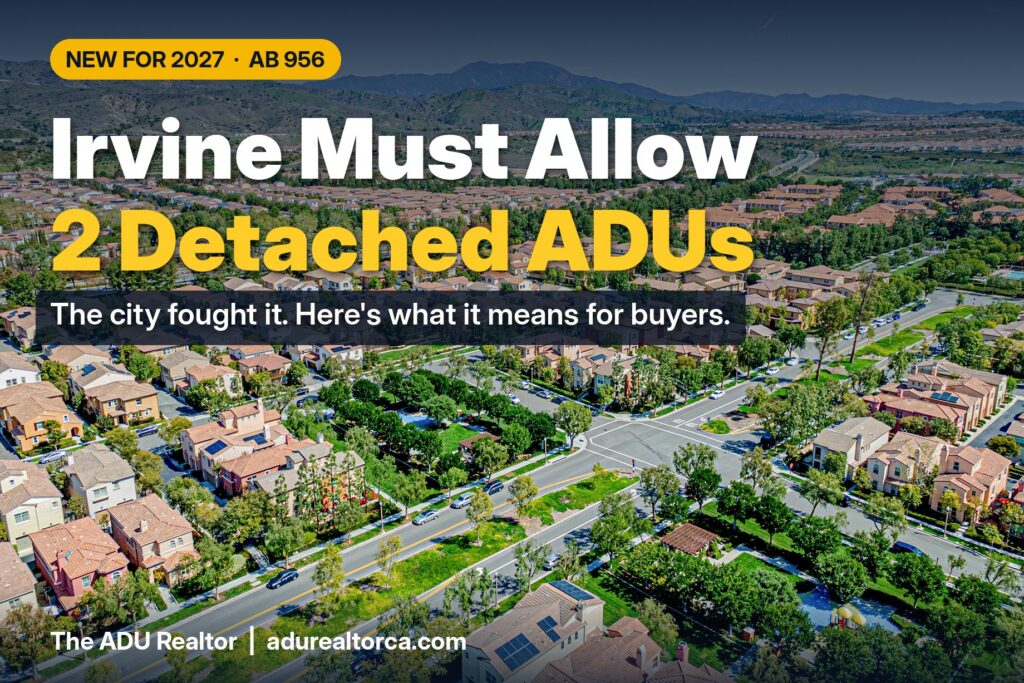
- Two detached ADUs (January 1, 2027): under AB 956, cities must approve two new detached ADUs of up to 800 square feet each.
- SB 9: a second main home on the lot, or a lot split into two parcels with up to two units each. SB 9 applies only in single-family zones, so it’s an R1 tool, not an R2 tool.
So the answer to “can I build a second house on my R1 property?” is usually yes, either as an ADU or through SB 9. I explain how they combine in How SB 9 Works With ADUs and the full SB 9 rules in SB 9 in Orange County.
What Is R2 Zoning?
R2 allows two primary units on a lot, typically a duplex or two detached homes. Height, coverage and parking rules are often a bit looser than R1. For ADUs, it depends on what’s already on the lot:
- R2 lot with an existing duplex: state law allows up to two detached ADUs plus conversion ADUs in non-livable space like storage rooms or garages. That can mean four or five units on one lot.
- R2 lot with just a single-family house: you can usually build a second main unit by right, then add ADUs. These are often the best-value lots I find, because they’re priced like a house but zoned for more.
- Larger R2 or R3 lots: SB 684 allows small-lot subdivisions of up to 10 homes on multifamily-zoned land.
The multifamily ADU counting rules are in SB 1211: Up to 8 Detached ADUs. One catch: junior ADUs only work with a single-family home, not on a multifamily building. See Can You Build a JADU on a Multifamily Property?
Max Units: R1 vs R2 Example
Here’s how the same 7,000-square-foot lot plays out under each zone, assuming access and utilities work:
| Scenario | Typical max units |
|---|---|
| R1, house + ADU + JADU (2026) | 3 |
| R1, house + two detached ADUs (2027) | 3 |
| R1, SB 9 lot split, two units per lot | 4 |
| R2, existing duplex + two detached ADUs | 4 |
| R2, duplex + two detached ADUs + garage conversion | 5 |
Real limits depend on lot coverage, setbacks and city rules. The full unit math by lot type is in How Many ADUs Are Allowed on One Property, and coverage limits are in Lot Coverage With Multiple ADUs.
Which Zone Is Better for an Investor?
- R1 is better if you want a house you can live in or rent at a premium, plus one or two ADUs. Easier to finance as a single-family home, and SB 9 adds an exit option.
- R2 is better if you want the most units and income. R2 lots with an older single-family house are worth hunting for.
If you’re weighing an existing duplex against a house you’ll add an ADU to, I compare them in Are Duplexes a Good Investment? Corner lots in either zone are a bonus. Here’s a corner-lot example in Orange.
How to Check a Property’s Zoning
- Look up the parcel on the city’s GIS zoning map. In the City of LA, use ZIMAS.
- Check for overlays: coastal zone, historic district, specific plan or fire zone.
- Read the zone’s standards in the municipal code: setbacks, height, lot coverage, parking.
- For a big decision, ask the city for a zoning verification letter.
State ADU rules apply in every residential zone. The HCD ADU handbook is the official reference.
Frequently Asked Questions
What is R1 zoning in California?
Single-family residential: one main home per lot. State law still allows ADUs, a junior ADU and, in most cases, SB 9 units.
Can I build a duplex on R1?
Often yes, through SB 9, which allows two primary units on most single-family lots. An ADU is another way to get a second unit.
Does SB 9 apply to R2 lots?
No. SB 9 applies only in single-family residential zones. R2 lots already allow two units and can add ADUs under the multifamily rules.
Can I add an ADU on an R2 lot?
Yes. With an existing duplex, state law allows up to two detached ADUs plus conversion ADUs in non-livable space.
Find the Right Zone for Your Plan
I check zoning, lot size, access and utilities on every property before a buyer makes an offer, and I keep an eye out for R2 lots priced like single-family homes.
👉 Book a buyer ADU consult call to go through your options with Dylan
Prefer to talk now? Call Dylan Serna, ADU Realtor at 714-860-2868.
Dylan Serna | The ADU Realtor | eXp Realty | DRE #02217359
This post is general information, not legal advice. Zoning names and standards vary by city; confirm with the city for any specific parcel.